The History of Jesse Valencia & Gorky in 40 Facts for Jesse’s 40th Birthday
Gorky Is (Probably) The Most Controversial Rock Band You’ve Never Heard Of
Every generation has one: a band too wild, too self-involved, and too chaotic for the mainstream to let in on purpose. For the past 25 years, buried deep in the mountains of rural Arizona, that band has been Gorky, who now have crawled out of the high desert and taken new roots in Portland.
Formed in a high school geography class by Jesse Valencia and his blood brother-in-spirit Ben Holladay, Gorky were destined from day one to be more than just another “indie sleaze” band. Their story reads like a rock’n’roll fever dream: drug-fueled first shows, ex-Hell’s Angels producers, lineups exploding mid-performance, and beefs with Arizona rock royalty. One minute they were getting songwriting lessons from Michelle Branch and opening for bands like Eyes Set To Kill, the next they were nearly sued by Hanna-Barbera over a Flintstones-themed music video and becoming the cover story of The Arizona Republic.
But Gorky is about more than chaos. They are political, prophetic, and deeply of their time. They livestreamed Occupy Wall Street, played Bernie Sanders rallies, and wrote anthems of small-town disillusionment and desert romanticism that helped define the “White Mountain Sound” — Arizona’s answer to Britpop and indie sleaze.
They’ve become a cult legend in the making, a band whose history stands shoulder-to-shoulder with the mythologies of bands much bigger than them, bands like The Velvet Underground, The Libertines, or the Meat Puppets. For 25 years, through tragedy and triumph, Gorky has built a discography that feels less like a career and more like a scrapbook of indie rock’s messy soul.
Now, for Jesse Valencia’s 40th birthday October 6th, his and Gorky’s story comes into focus: not as a footnote, but as one of the great untold epics of American rock’n’roll.
Here is the history of Jesse Valencia & Gorky in 40 Facts for Jesse’s 40th birthday…
-
All-American Indigenous and Immigrant Heritage
Descended from Yaqui refugees escaping the Porfiriato genocide of the 1900’s, German-Scandinavian Midwestern farmers and Appalachian Anglo-Saxons, Jesse Valencia was born October 6, 1985 in Phoenix, Arizona.
-
Indigenous Reclamation
Jesse’s family was enrolled in the Texas Band of Yaqui Indians in 2024. Valencia secured his family’s enrollment by proving their ancestry through historical evidence and records, applying his graduate level research skills, following decades of separation.
-
Early Artistic Interests
Jesse has been into the arts since he was a young child. His first rejection letter was at age 8, after he submitted a four-page comics display to Marvel Comics to be a penciller on Spider-Man. They were amused and charmed at his submission, and said to submit again when he was 18. He was so crushed he never did, though he has remained an illustrator by both hobby and commission and publishing a comic remains one of his dreams. He is now both an illustrator, graphic designer, and painter.
-
A Noteworthy Musical Origin Story
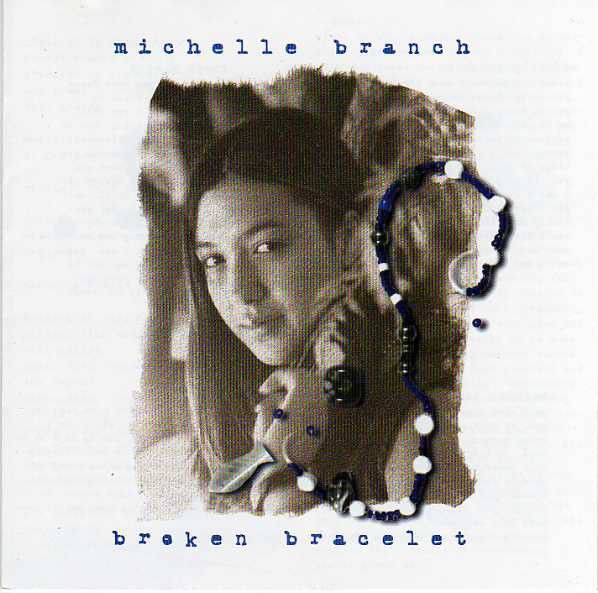
Jesse first learned guitar from his dad at age 12 after seeing “Purple Rain”, and later learned his first songwriting lesson from fellow Northern Arizonan and Grammy winner Michelle Branch, whom he met at the Verde Valley Music Festival in the year 2000, before she was signed to Maverick Records. Jesse sent Michelle some of his lyrics. They were too long and complex, and she told him to write the music first, then add lyrics after (which was good advice). He is now a multi-instrumentalist, playing guitar, bass, drums, keyboards, harmonica, and vocals.
-
The Birth of the Gork
Jesse moved to Show Low, Arizona as a teenager, and met Ben Holladay in their high school geography class. Their band Gorky was born out of their shared love of music, comic books, movies, and pop culture almost immediately. The band’s earliest musical influences included Weezer, Oasis, The Strokes, and other bands popular in indie sleaze circles at the time.
-
A Brotherhood Bound In Spirit
While his father’s family was Catholic and Presbyterian and his mother’s family was Lutheran, Jesse was raised non-denominational Protestant but became interested in religion shortly after moving to Show Low, a predominantly Mormon town. Jesse later converted to Mormonism while still in high school, and was baptized by Ben into the faith, whose family helped welcome him into the Church. Ever since, they have considered one another family. Jesse and Ben both later left the LDS faith in their 20’s, disillusioned with its racist mythology and hyper-patriarchal worldviews.
-
What’s In A Name?
The name of the band comes from Jesse’s childhood friend Whitney’s name for her comfort blanket, her ‘gorky’, which he learned about because she had written a short story about a fictional band named gorky, and after reading the story Jesse asked her if he could name his band that, since he could not think of anything else. She agreed, as long as he kept the ‘g’ lower case, as it is in the logo. Later, the band learned that the word ‘gorky’ meant ‘bitter’ in Russian, and was both the namesake of famous abstract expressionist painter Arshile Gorky, and a Soviet-era Russian author Maxim Gorky, whom Gorky Park is named for, and the heavy metal band named after the park. Jesse then began incorporating abstract expressionist art and Soviet communist aesthetics into Gorky’s brand. Also, a famous Belgian band, Gorki, began as ‘Gorky’ in the 90’s. As digital streaming began to rise, Jesse communicated with Gorki’s lead singer and songwriter, the late Luc de Vos, regarding their shared name. The band’s manager replied, “Don’t worry. No problem for us. We are GORKI from Belgium and you guys are GORKY from USA.”
-
Acting Origins: Shakespeare and Broadway Musicals
Moving to Show Low too late for football tryouts, Ben invited Jesse to join him in the Drama Club. His starring roles in Taming Of The Shrew, A Midsummer Night’s Dream, and Guys And Dolls later earned him a full-ride scholarship to the local community college’s theater program, which he turned down to pursue music with Gorky full time.
-
A Dominant Force In The Arizona Music Scene From The Start
The band had a string of early successes in the mid-2000’s, winning a local Battle of the Bands, earning heavy local radio airplay and opening for nationally touring Arizona bands like Lydia, Eyes Set To Kill and the Stiletto Formal, while befriending bands touring through Arizona that they liked, such as The Subways.
-
Inventors of the White Mountain Sound
Gorky are among the originators of the “White Mountain Sound”, a unique, tough, anthemic blend of Southwestern indie rock, folk, country, and punk music that became Arizona’s biggest export of the 2010’s as Jimmy Eat World was in the 2000’s, Gin Blossoms were in the 90’s, and Meat Puppets were in the 80’s. By itself, the community of musicians which created the White Mountain Sound have produced not only Gorky but Zella Day, Charles Ellsworth, WRNTY, Phil The Band, Brandon Rodelo, Negative Thirty-Two, Chaparrelle, Phantom Spring, Phil The Band, Ryan David Orr, The Brighter Still, Alaska and Me, Boxen, and more.
-
An Early Benefactor In Michael Fatali
World-famous landscape photographer Michael Fatali gifted Jesse and first bass player Christopher Christiansen with their first PA System in exchange for helping Christiansen’s father, a custom fabricator and artisan, install Fatali’s new gallery sign which he had built.
-
Drugged-Out First Show
The band’s first show was a fundraiser concert for the Show Low High School drama club. Nervous that they would suck, the band took then-legal over-the-counter ephedrine and played too fast. Their second was at the local LDS Stake Center where Jesse and Ben went to church. Their third was performing for then-Arizona Governor Jan Brewer at a gathering in Holbrook, Arizona.
-
The First Line-Up Change
The band’s first bass player, Chris Christiansen, quit the band to join the Army, at which point Gregg Aldridge joined on bass. Gregg was 14 at the time and a freshman in high school, while Jesse and Ben were seniors. While Chris had brought a unique flavor to the original Gorky sound with his alt metal, math rock, and obscure tastes, Gregg brought a youthful, punk rock attitude and aesthetic that Jesse and Ben hadn’t yet encountered. During this transition period, Savannah Decker also joined the band on keyboards after initially trying out for guitar.
-
The First Break-Up
Chris rejoined on guitar after being medically discharged from the Army. The band started gaining momentum in Phoenix before he then quit again live during a show opening for post-hardcore band For The Record after confessing to the audience that he’d been secretly dating Ben’s ex-girlfriend, an aspiring fashion model and Playboy playmate. Christiansen was then evicted from the home the band all shared in Show Low, originally Ben’s home. Jesse and Ben put all of Chris’s belongings to the curb and hid the PA Jesse and Chris had earned from Fatali’s at Gregg’s, at which point Chris and the model girlfriend broke into the house, stole their CD collections, and vandalized the entire property. Years after the incident, all parties reconciled.
-
We Tried To Sound Like Anywhere But Where We Were And Ended Up Sounding Exactly Like Where We Were
At first, Gorky struggled to come up with an original sound, and resisted the pull of the dominant pop punk, emo, and screamo subcultures at the time, finding inspiration instead in 60’s psychedelic rock, 90’s Britpop, the garage rock revival happening in NYC, and the more indie-minded Midwest scene. Jesse’s songs became filled with characters and stories, mostly of an offbeat, nihilistic, or satirical nature, intended to paint an accurate picture of what it was like being stuck in a small conservative town in your teens and twenties when you felt you belonged elsewhere, chasing your dreams.
-
Our First Engineers Were Ex-Hell’s Angels And UFO Abductee Adjacent
The band’s first recording session was in Snowflake, Arizona with a former Hell’s Angel-turned-devout Catholic who went by ‘T-Bone’ and looked like Viggo the Carpathian from Ghostbusters 2. The session went on longer than anticipated on account of T-Bone’s young children accompanying him. T-Bone threatened them when the band didn’t pay up, and withheld the master recording. They never saw him again. Their second recording session was with Rogelio Figueroa, a musician and inventor who is married to one of the daughters of famed UFO abductee Travis Walton, who lives in the White Mountains. Their third session was with Bob Geiger, recorded in their practice space, Gregg’s garage, becoming the lost album “The Tension of Nostalgic Minds”, only a few tracks of which still exist.
-
First Move
After moving to Phoenix with Ben’s brothers Vaughn and Keith while Gregg was finishing high school with a plan to push the band in Phoenix, Ben began dating one of Gregg’s cousins who lived in San Diego, and Jesse began dating the cousin’s best friend. After a heated summer of love, hearts were broken as Jesse and Ben realized that these long-distance relationships would be unsustainable, and they ended them. Unable to find jobs in the city, both Jesse and Ben ended up moving back to Show Low.
-
Their Own Brand Of Marxism
Jesse joined the Communist Party in 2004 shortly after graduating high school and lied about his affiliation in order to join the US Army Reserves a couple of years later. As a teenager in the early 2000's Valencia was radicalized by his own readings of Karl Marx, Che Guevara, and other socialist and communist heroes.
-
In The Army Now
Valencia joined the Army in 2006 as an MP, in the footsteps of his father who was a Police Chief and FBI Academy graduate, and his grandfather who was a parachute rigger in the 101st Airborne. Valencia served for nearly six years and was honorably discharged in 2011. He spent the entirety of his Army signing bonus on a hedonistic 21st birthday bash and new band equipment at the Tempe location of Guitar Center. The store let him sign their wall with the ‘Gorky’ logo alongside Linkin Park, Green Day, and others.
-
A Felon And A Cop At The Same Time
Jesse Valencia is an ex-felon with a rap harder than most gangsta rap artists, all related to a DUI accident he was at fault in, in 2008, which left him with a fractured talus and delaying the release of Gorky’s album “High In The Low” by two years. He now has an ankle replacement. At the time of the accident, Jesse’s unit the 56th MP Co was being investigated by both the military and the media for torturing detainees during their deployment, and he was never disciplined for it. He later was honorably discharged for medical reasons in May of 2011, halfway through his probation.
-
Highly Educated, Or Just High?
To pay off his $45,000 restitution and probation fees, Jesse went back to college on the GI Bill and took out federal student loans to pay the court. Though his theater scholarship had long since passed him up, the Dean of the Performing Arts Department at the local community college who originally awarded it to him allowed him to complete his mandated 360 hours community service by building sets and acting in the ensemble for that year’s fall play, the musical “Aida.” This marked Jesse’s first return to the theatrical stage since high school as well as his last theatrical performance, at which point he transitioned to film. After building up a habit of robbing Peter to pay Paul, Jesse became a professional student and now has Three Master’s Degrees: an MFA in Creative Writing and an MA in Literature from Northern Arizona University, and an MFA in Screenwriting from the David Lynch Graduate School of Cinematic Arts at MIU. He attended college off and on from 2006 until 2020 and was NAU’s first MFA in Creative Writing graduate to publish his first book of Creative Nonfiction, Keep Music Evil: The Brian Jonestown Massacre Story.
-
Rock And Roll Escapist
The year after the accident, Jesse started working on his book about the infamous psychedelic rock band the Brian Jonestown Massacre, which led him to pursue his first graduate degree, the MFA in Creative Writing at Northern Arizona University. Ten years later, “Keep Music Evil” was published by Jawbone Press, a narrative history of the band framed as a memoir of Jesse’s, influencing both Joel Gion’s memoir “In The Jingle Jangle Jungle” and Ondi Timoner’s 2024 documentary “DIG!XX”
-
Transition Period
Jesse lived with Benjamin Turner (WRNTY, Alaska and Me) for a time in Flagstaff while he was in college, and the two ended up writing some songs together that later became Gorky classics, including “Sing A Song” and “More Electric Music.” Turner sparked Jesse’s interest in indie folk music, and this was the height of the indie “boom, clap” era. After Gregg married a fan of the band, he left the group before their landmark 2014 show in Flagstaff opening for Joel Gion and The Primary Colours, at which point Houston Ellsworth and Tevin Crabdree joined, changing the sound and direction of the band once again as Jesse was getting out of the army and off of probation.
-
Anti-Corporate Origin Story
He won an EEOC settlement against a local franchise pizza chain after they fired him for needing surgery on his ankle. He read the ADA and made his own case. Most of the award money went to his probation fees.
-
Aspiring Screen Actors and Collaboration with Travis Mills
In the 2010’s, Jesse began a creative collaboration with writer-director Travis Mills for Gorky’s music videos for “Datass” and “Super Drunk.” Jesse’s first onscreen acting role was opposite Tom Sizemore in Mills’ independent crime drama “Durant’s Never Closes”; Valencia first saw Sizemore in Saving Private Ryan, which was the first R-Rated movie his dad allowed him to watch in the theater. Jesse composed score for Travis Mills’ films “Durant’s Never Closes” and later “Bride of Violence”, the latter of which he and Ben both had roles in, marking Ben’s first and only onscreen role.
-
Flintstones Controversy With Hanna-Barbera
The Travis Mills-directed music video for “Super Drunk” was shot on location at a Flintstones-themed children’s playground near the Grand Canyon. After seeing pre-production photos of the video shoot, Hanna-Barbera threatened to sue Gorky and Mills for their dark satire of American culture, forcing them to open the video with a disclaimer.
-
Political Beginnings And Early Activism
Jesse was removed as the first Vice President of Northland Pioneer College’s Student Government Association after publishing an article in the student government newsletter endorsing Barack Obama over Hillary Clinton and inviting Noam Chomsky to speak at the college. In 2011, Jesse live-streamed Phoenix’s heavily-publicized Occupy Wall Street protest before escaping arrest, and performed at a Bernie Sanders fundraiser in early 2016. The “Dump On Trump!” remix of “Super Drunk” was retweeted by CNN around the time Gorky headlined the Flagstaff Bernie Sanders rally. That same day, Gorky fan Skye Perez, the kid sister of their roadie and touring manager Chris Perez, and their father were killed in an accident on the highway. Skye’s boyfriend at the time, Jonathan Apodaca, later became the drummer for Negative Thirty-Two, another local band from the White Mountains.
-
Beef With The Gin Blossoms
Jesse and the band were forced to abandon sessions for Gorky’s fifth album when the Gin Blossoms sold Uranus Studios, where the band was recording, to Four Peaks Brewery without notifying them. Beef still exists to this day, with Jesse describing Gin Blossoms’ music as “Boomer pop grunge shite.”
-
Movie Theater Exhibitor Worker
Jesse has worked for WME Theatres since 2012. After being a manager for several years, he built their social media from the ground up, helped lead the company through the pandemic, and has been recognized in the broader movie theater industry for his work, including speaking on panels at national conferences. He also helped organize the Show Low Film Festival, now entering its ninth year.
-
The Dharma, David Lynch, and Transcendental Meditation
Beating out three other applicants for his spot, Jesse was accepted into the David Lynch film school in 2018 on the same day he was offered a contract for the Brian Jonestown Massacre book. The David Lynch Foundation covered the cost of his Transcendental Meditation training, which he credits with saving his life. Jesse graduated the David Lynch film school in 2020 and is now a public advocate for T.M.
-
Accidental Lobbyist
He made Arizona history when his Sitgreaves County publicity stunt nearly created Arizona’s 16th county, a stunt intended to promote his David Lynch thesis. During the Sitgreaves stunt, he exposed the white supremacy in the Arizona GOP against Rep. Walter Blackman, the first black Republican ever elected to the AZ legislature, brought the helium industry to Arizona and wrote the part of the Arizona film tax credit bill that guaranteed in-state hiring to grow the film industry in AZ.
-
Beef With Ariel Pink
In 2020, during the Jan 6 Capitol Hill riots, Ariel Pink was caught attending the riots to avoid sexual assault charges in Los Angeles. Jesse, who had never liked Ariel or his music, was furious that this got more press than his Sitgreaves County stunt, and attacked Ariel online. Ariel hit back, comparing Jesse’s crudeness to that of Anton Newcombe, whom Jesse wrote “Keep Music Evil” about.
-
From Fan To Collaborator To Disappointment
After graduating the David Lynch film school, Jesse worked on a sequel to “Purple Rain” with Jerome Benton, who later removed Jesse from the project after advocating for his creative rights. Al Magnoli, director of “Purple Rain” whom Jesse met through Jerome, was initially going to direct Valencia’s David Lynch thesis following the Sitgreaves stunt, but ultimately decided to write his own project based on Valencia’s script titled “Rock Heart.” The combined letdown of these experiences ultimately led to Jesse shelving his now-finished second book project, Dreams: The Films of Prince.
-
The Death of Ben Holladay
After contracting Covid-19, Ben discovered that he had Alpha-1 Antitrypsin Deficiency, a rare genetic lung disease. After the death of his fiancee Rachel Weddle, Ben moved in with Jesse for the last six months of his life, and passed away a week before what would have been his 38th birthday.
-
Fighting Live Nation In Portland
Jesse joined MusicPortland in 2024 and exposed Live Nation’s manipulation of land sale processes in Portland during the music community’s much-publicized fight with them there. After the hearings, he then helped elect Portland’s first-ever pro-music City Council and Mayor in the 2024 election. Valencia's advocacy methods, while unorthodox and controversial, nevertheless have helped expose much of what needs reformed in the city.
-
Independent Filmmaker
Jesse is an award-winning screenwriter and filmmaker, producing and directing several Gorky music videos, and contributing art and music composition to several other projects.
-
Lesser-Known Talents
He is a published poet. His first published piece was in a Veterans’ anthology published by Iraq Veterans Against the War. He is also a gifted illustrator with an impressive portfolio of comics, gig posters, album art, and more.
-
Anti-War Veteran
He’s been a committed anti-Zionist since joining the Army in 2006, realizing how unhealthy the United States’ relationship was with Israel; in 2007, he had surgery on a shoulder injury and avoided deployment to Tikrit. His unit, the 56th Military Police Company, was subsequently investigated for torture during their deployment. On October 5th, 2025, the last day of his thirties, Valencia spoke alongside Councilor Mitch Green and other veterans against Trump's deployment of National Guard troops to Portland. Valencia continues to be active in veterans organizations and anti-war demonstrations.
-
Other Musical Ventures
Valencia is an exceptionally gifted hip-hop/R&B artist and producer and working studio musician, and has worked on several projects with fellow indigenous artist Brandon Rodelo, contributing beats, vocals, bass and guitar.
-
An Impressive Self-Released Discography
Gorky’s discography is like a living scrapbook of the indie sleaze era, beginning with 2010’s “High In The Low”, 2011’s “The Deuces” 2013’s “More Electric Music”, 2016’s “Gorky”, 2019’s “Mathemagician”, 2021’s “Sitgreaves County” and 2022’s “The First Band On Mars”, spanning genres as diverse as indie folk, psych rock, old school rock and roll, space rock, punk, country and more. Their most well-known songs include “Action Pants”, “She Spoke”, “Datass” and “Super Drunk.” All of their music is self-released and the band has self-managed and self-booked since 2001.